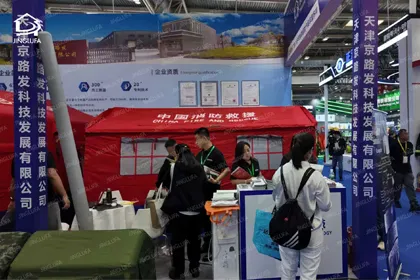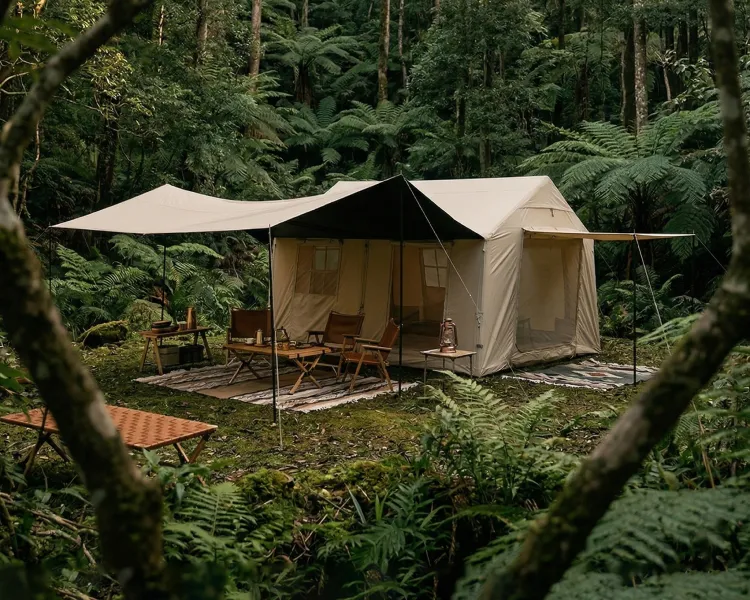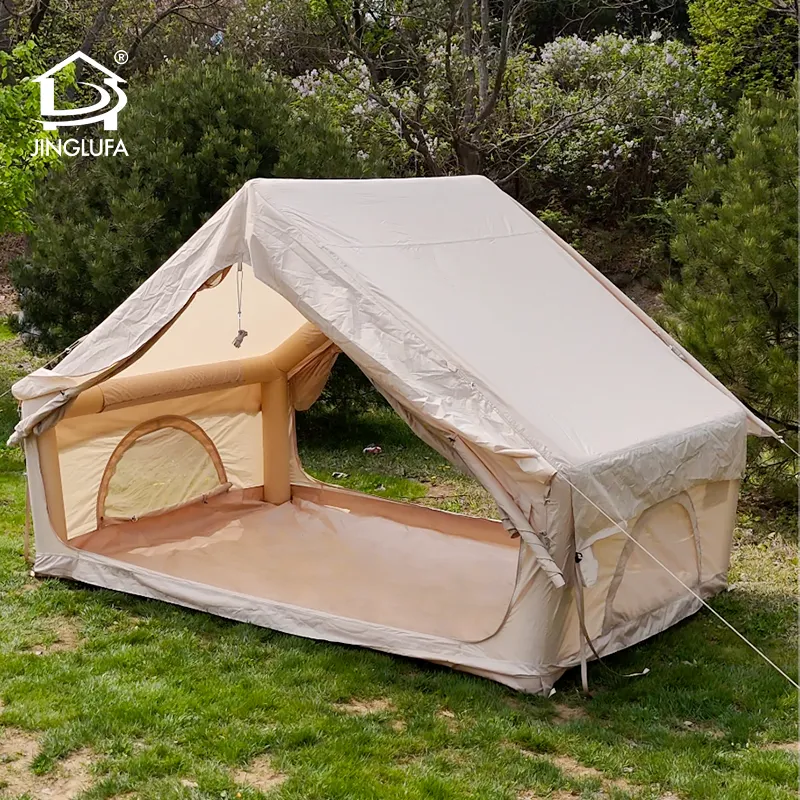
Emergency response teams do not buy a decontamination tent or medical tent as a simple shelter. They buy a temporary operating space that must support patient flow, contamination control, privacy, equipment connection, drainage, and fast deployment. In flood zones, epidemic response, fire rescue, industrial accidents, border health checks, and humanitarian missions, the tent layout affects how quickly a field team separates clean and contaminated areas.
For B2B buyers, the key question is not only size. A suitable inflatable emergency tent should match the response procedure, staffing level, power and water supply, expected duration, climate, and storage plan. Jinglufa's emergency and military inflatable tent range includes public decontamination inflatable tents, A-frame medical inflatable tents, shower tents, toilet tents, fire rescue tents, power grid inflatable tents, and decontamination accessories.
A decontamination tent is used to control the movement of people, water, chemical agents, clothing, and contaminated equipment before they enter a medical or command area. It is commonly deployed by fire departments, hospitals, emergency agencies, industrial safety teams, and public health organizations.
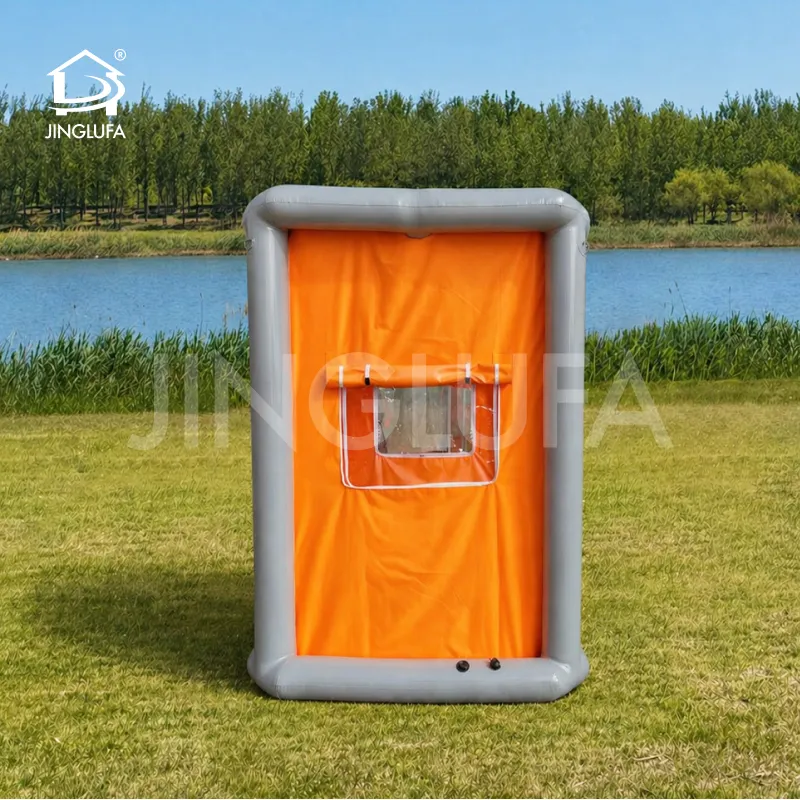
For emergency procurement, the decontamination tent should not be treated as an empty inflatable room. It needs sealed access, controlled discharge, washable surfaces, and a layout that supports step-by-step procedures. A public decontamination inflatable tent can be configured with IP67 waterproof protection, airtight zippers, UV-C sterilization zones, integrated drainage, chemical-resistant flooring, and 360-degree pathogen containment.
A medical tent is a temporary clinical space for triage, first aid, observation, isolation, mobile clinics, or field hospital modules. In emergency response, it should provide more than weather protection. It needs internal zoning, staff movement space, privacy, power access, oxygen routing, lighting compatibility, and quick-clean surfaces.
A frame medical inflatable tent can support a negative-pressure field hospital module with antimicrobial PVC lining, IV hook grids, and 12+ hour airlock integrity. The configuration can also support X-ray shielding, OR-grade lighting rigs, privacy partitions, oxygen and power supply integration, and quick-sterilizable flooring. These features are useful when the medical tent must handle triage, treatment, short-term observation, or isolation before patients move to permanent facilities.
| Selection Factor | Decontamination Tent | Medical Tent |
|---|---|---|
| Main function | Washing, disinfection, controlled entry and exit, contamination management | Triage, treatment, observation, isolation, mobile clinic, field hospital support |
| Typical users | Fire rescue teams, public health agencies, industrial safety teams, hospitals | Hospitals, NGOs, military medical units, emergency response teams |
| Important configuration | Airtight zippers, integrated drainage, chemical-resistant flooring, UV-C and chemical disinfection ports | Privacy partitions, IV hook grids, oxygen and power integration, sterilizable flooring |
| Material structure | Dense air structure with Oxford cloth or cotton cloth options | Dense air structure with Oxford cloth or cotton cloth options |
| Capacity reference | 6-10 people, with customized size available | 6+ people, with customized size available |
| Deployment method | Quick inflation with air pump and windbreak rope | Quick inflation with air pump and windbreak rope |
| Wind resistance | ≤18m/s, depending on anchoring and site conditions | ≤18m/s, depending on anchoring and site conditions |
The safest emergency site usually separates four zones: contaminated entry, decontamination, medical evaluation, and clean exit or transfer. If these zones are mixed, staff movement becomes inefficient and cross-contamination risk increases.
For a basic emergency response setup, buyers can consider the following layout logic:
Front zone: Registration, contaminated entry, PPE check, and waiting control.
Middle zone: Decontamination tent with water supply, drainage, chemical or UV-C process, and observation windows.
Rear zone: Medical tent for triage, first aid, patient observation, or transfer preparation.
This layout can be supported by inflatable shower tents, inflatable toilet tents, water storage bags, water pumps, tent pumps, and decontamination devices. For large programs, modular inflatable shelters can connect multiple functional spaces into a field hospital, command post, or public health checkpoint.
Inflatable emergency tents are often selected when response teams need fast setup with limited manpower. Instead of carrying complex metal frames, teams can inflate the structure on site and focus on anchoring, internal equipment, and workflow preparation. In medical shelter projects, interconnected inflatable emergency shelters can be deployed from a single inflation point, with full deployment completed in under 15 minutes depending on configuration.
This is valuable for mobile medical units, disaster response teams, and military or government field operations. The emergency inflatable tent category is designed for rapid deployment, portability, easy transport, and field protection in demanding environments. For buyers managing multiple regions, the same platform can support medical, fire rescue, decontamination, sanitation, command, and temporary shelter functions.
A clear RFQ should define the operating procedure before the buyer asks for a price. Otherwise, suppliers may quote a shelter that fits the size requirement but not the response workflow.
Procurement teams should prepare the required capacity, customized size range, deployment environment, wind and rain exposure, number of entrances and exits, flooring needs, drainage method, chemical resistance requirement, privacy level, lighting plan, air pump quantity, spare parts, packing method, and training documents. For medical tent projects, also define whether the tent needs IV support, oxygen and power integration, negative-pressure planning, airlock performance, or modular connection with other tents.
For tenders and long-term emergency stockpiles, standardization matters. Compatible pumps, windbreak ropes, repair kits, accessories, and modular layouts can make maintenance easier and reduce training time when different local teams deploy the same system.
A decontamination tent should be selected around controlled entry, drainage, sterilization, and contamination management. A medical tent should be specified around triage flow, patient privacy, power, oxygen, lighting, and quick-clean operation.
For emergency response teams, the most reliable procurement plan starts with workflow, capacity, site conditions, and accessory requirements. Send your project layout, quantity, target capacity, and deployment conditions to Jinglufa for a configured emergency tent proposal.
A decontamination tent is used for washing, disinfection, controlled entry and exit, and contamination management. A medical tent is used for triage, treatment, patient observation, isolation, mobile clinics, or field hospital functions.
Yes. In emergency response planning, a decontamination tent is often placed before a medical tent so contaminated individuals or equipment can be managed before entering a clean treatment zone.
The public decontamination inflatable tent can be customized on demand and is suitable for 6-10 people depending on configuration, workflow, and internal zoning requirements.
Important features include privacy partitions, IV hook grids, oxygen and power integration, quick-sterilizable flooring, negative-pressure planning, airlock integrity, and clear internal zoning for triage or treatment.
Common accessories include tent pumps, windbreak ropes, water storage bags, water pumps, decontamination devices, spare repair kits, lighting, and sanitation support equipment.
Buyers should provide application scenario, required quantity, target capacity, customized size range, deployment site, climate conditions, accessory requirements, drainage plan, power and water supply needs, and expected delivery schedule.