Remember arriving at the campsite after a long drive, only to spend 30 minutes wrestling with a confusing mess of tent poles? That frantic search while the kids get restless is a classic, frustrating part of camping for many families.
What if you could skip that part entirely? Inflatable tents, also known as air tents, solve this exact problem. Instead of rigid poles, they use sturdy air-filled beams that allow one person to pitch even a large family tent in under 10 minutes.
But are they durable enough for a windy night or a sudden downpour? This guide breaks down how to choose the right inflatable tent by focusing on what truly matters: size, weather protection, and reliability, so you can decide if it's the right upgrade for your camping trips.
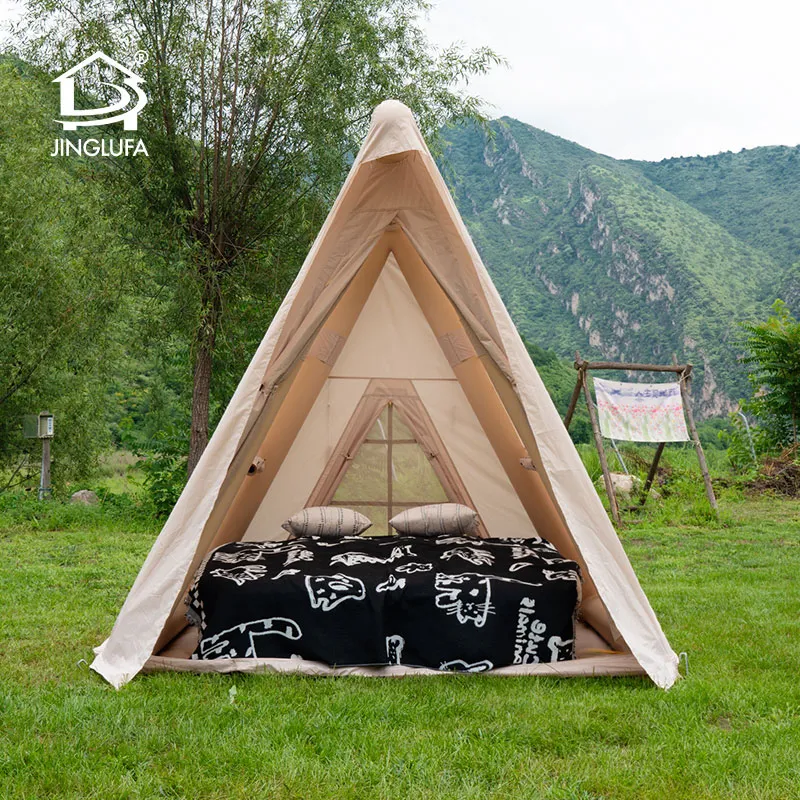
An inflatable tent’s structure comes from robust “air beams” that function as its skeleton. Using the included pump, you inflate these beams until they become incredibly rigid, creating the entire frame in just a few minutes. This is the key difference from a pole tent and what makes setup so fast.
Don't picture a flimsy pool float. Each beam is a multi-layered system: a tough inner tube holding the air, protected by a rugged fabric sleeve. This construction makes them puncture-resistant—more like a durable river raft than an air mattress—so you don't have to worry about stray branches or curious pets. This design also offers a huge advantage in wind, as the beams flex under pressure and return to shape, whereas metal poles can bend or snap.
A tent labeled "4-Person" rarely fits four people comfortably. Manufacturer ratings usually mean four people in sleeping bags side-by-side, with no room for gear or personal space. For a good trip, it's crucial to look beyond these optimistic specs.
For comfortable camping, follow the 'Minus Two' rule: take the tent's stated capacity and subtract two. This practical guideline accounts for gear, air mattresses, and the personal space everyone needs to enjoy the experience. This means a 6-person model is often one of the best inflatable tents for a family of four. While a larger size adds a little packed weight, the gain in comfort is almost always worth it for car camping.
Inflatable tents are just as waterproof as poled models; the key is knowing what to look for. You’ll see a number followed by 'mm'—this is the waterproof rating. Think of it in tiers: 1,500mm handles light showers, but for reliable protection from steady rain, look for 3,000mm or higher.
A great rating isn't enough if the seams leak. Sewing creates tiny holes, so always check for “fully taped seams.” This means a waterproof strip has been applied over the stitching inside the tent, blocking any water from seeping through during a downpour.
Surprisingly, inflatable tents often have an advantage in windy conditions. When a strong gust hits a traditional frame, rigid poles can bend or even snap. In contrast, the high-pressure air beams are designed to flex. Instead of fighting the wind, the structure gives way slightly and then bounces right back into shape once the gust passes. This flexibility prevents permanent damage, but it relies on a proper setup. Just like any tent, securing it with all the included guy lines is crucial for stability.
The magic of an inflatable tent reveals itself during setup. You just unroll the tent, peg down the corners, and connect the included pump. Within minutes, the air beams become firm, and your sturdy shelter is standing.
For ultimate convenience, many models feature single-point inflation. This time-saver means you connect the pump to just one valve, and the entire tent frame inflates at once. Packing away is just as painless. Simply open the large deflation valves, and the air rushes out, allowing you to fold the tent and get back on the road.
The number one concern for most people is a puncture, but the answer is reassuring: an inflatable tent doesn't "pop." A puncture results in a slow, manageable leak, not a sudden collapse. You’ll have plenty of time to notice the beam softening and make a plan.
Each air beam has two layers of protection: a flexible inner tube (the bladder) that holds the air, and a tough, zippered outer sleeve that acts as a shield. This makes punctures very uncommon. In the rare event a sharp object gets through, the fix is simple. Most tents come with an inflatable tent puncture repair kit, and the process is like patching a bicycle tire: locate the small hole on the inner tube, clean the area, and apply a self-adhesive patch. A puncture is a minor field repair, not a camping catastrophe.
Beyond easy setup, the best features enhance comfort. Two are essential. First, ensure it has good ventilation—plenty of mesh panels and low vents—to prevent that stuffy, humid feeling. Second, a sewn-in groundsheet is non-negotiable. This means the floor is fully attached to the walls, creating a sealed-off space that keeps insects and rainwater out.
For a true upgrade to your sleep, consider a model with blackout bedrooms. This dark-coated fabric blocks most daylight, a game-changer for sleeping in past sunrise or getting kids to bed while it’s still light.
Must-Haves: Good ventilation, a sewn-in groundsheet.
Nice-to-Haves: Blackout bedrooms, a built-in porch, power-cord entry points.
You’re ready to choose an air tent with confidence. Instead of getting lost in specifications, use this simple checklist to find your perfect match.
Size: Does the capacity fit your group according to the 'Minus Two' rule? (e.g., a 6-person tent for a family of four).
Weather Protection: Does it have a waterproof rating of 3,000mm or higher and fully taped seams?
Convenience: Does it feature single-point inflation for the fastest setup?
Durability: Is a puncture repair kit included for on-site fixes?
Answering these questions will help you select a tent that replaces pole-wrangling frustration with more time enjoying the outdoors.