In the world of temporary structures, a common question arises among emergency responders and outdoor professionals: Can an air-supported structure truly rival the strength of a traditional steel frame?
As a manufacturer with over 25 years of expertise at Jinglufa (JLF), we believe the answer lies in the fusion of high-performance materials and pneumatic engineering. Here is the factual breakdown of what makes a professional-grade inflatable tent durable.
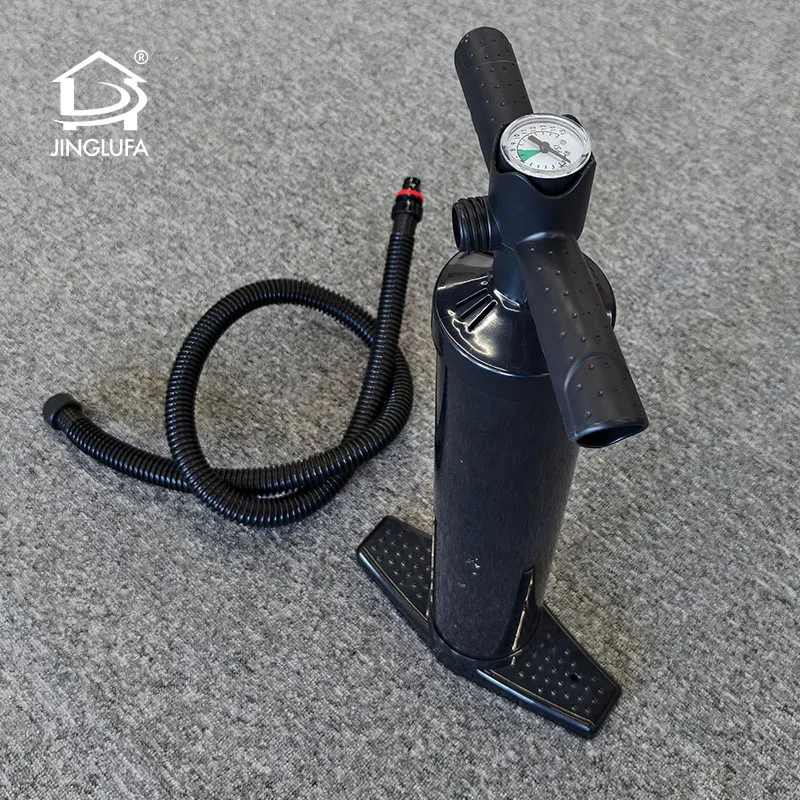
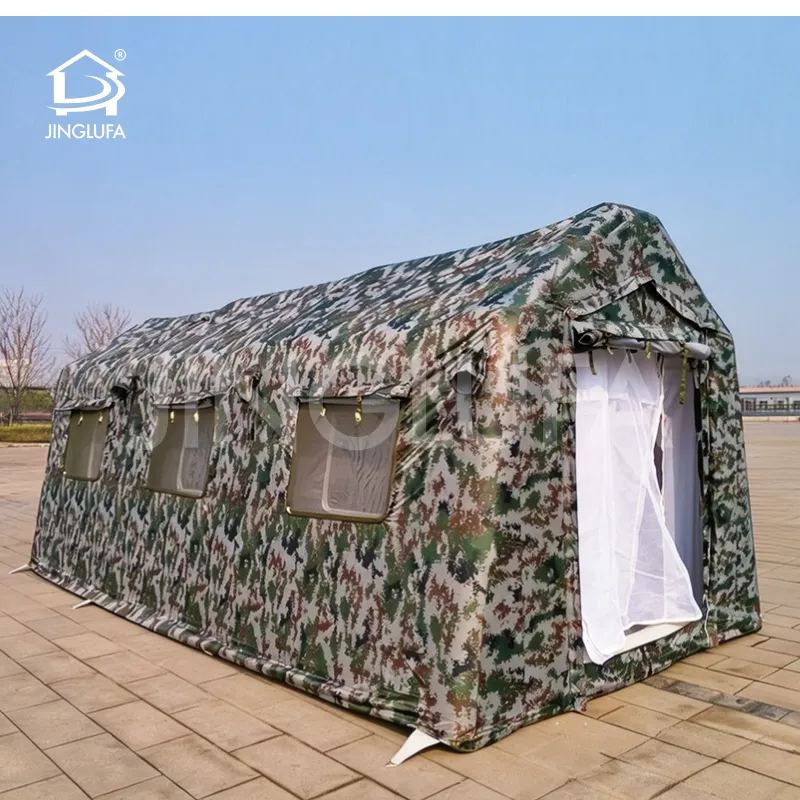
Unlike low-cost "bubble" tents, professional inflatable tents (like those used for military and medical relief) utilize high-pressure air columns.
The Science: These columns are typically constructed from heavy-duty PVC-coated fabrics. When inflated to the recommended PSI, the structural tension allows the tent to withstand wind speeds of up to 80-100 km/h without buckling.
The Benefit: In the event of extreme wind, the air frame "flexes" and bounces back, whereas a steel frame might bend or snap permanently.
The "skin" of the tent is its first line of defense. Based on industrial standards used in our Tianjin manufacturing facility:
420D Oxford Fabric: This is the "gold standard" for balancing weight and tear resistance. The "D" (Denier) represents the linear mass density of the fiber; 420D provides high tensile strength for long-term outdoor exposure.
Hydrostatic Head (Waterproofing): A professional tent must exceed a 3000mm waterproof rating. This means the fabric can withstand a 3-meter column of water before a single drop penetrates the surface.
UV & Flame Retardancy: For safety, materials must comply with international fire codes (such as B1 or M2 standards) and feature UV50+ coating to prevent fabric degradation under intense sun.
A common misconception in inflatable tent wholesale sourcing is that these structures are only for “temporary” use. While they can be deployed in under 10 minutes, depending on size, their lifespan is significantly extended by:
High-Frequency Welding: Using heat and pressure to fuse seams rather than just sewing them, which prevents air leakage and water ingress.
Modular Design: Professional units are often modular, allowing parts to be replaced or repaired in the field without scrapping the entire unit.
To ensure 100% factual accuracy in procurement, always verify that the manufacturer holds ISO 9001 (Quality Management) and CE Certification. These aren't just badges; they are proof that the tent has undergone rigorous stress tests for air pressure retention and structural integrity.
Summary for Decision Makers: Inflatable tents offer a superior strength-to-weight ratio compared to steel frames, provided they are built with professional-grade PVC/Oxford materials and high-frequency welded seams.
About Jinglufa (JLF): Established in 2000, Tianjin Jinglufa Technology Development Co., Ltd. operates a 60,000 m² facility dedicated to advancing tent technology. With over 20 patents and products serving 150+ countries, we specialize in high-performance emergency, military, and camping shelters