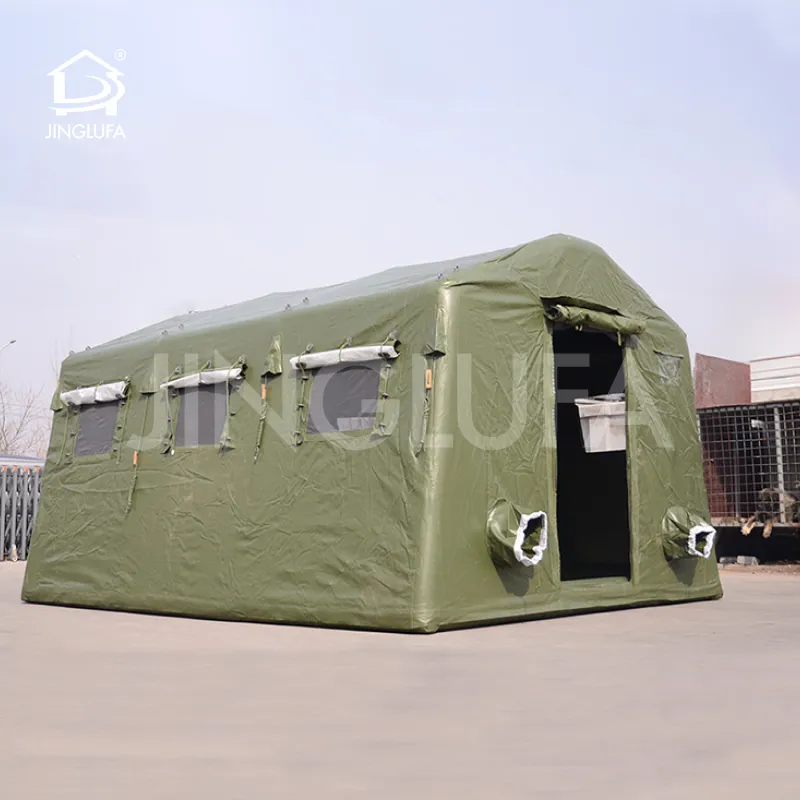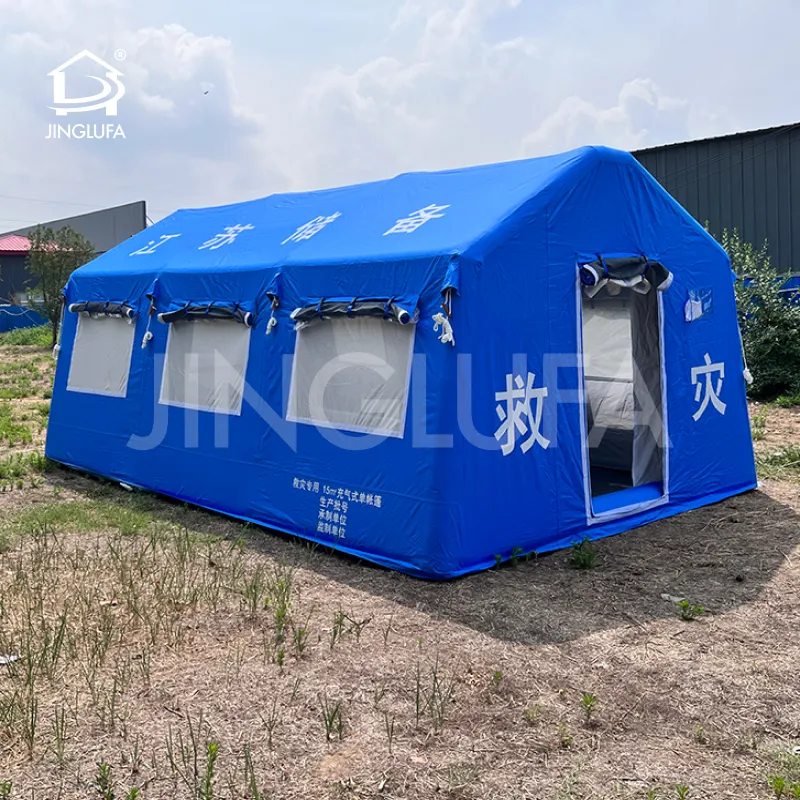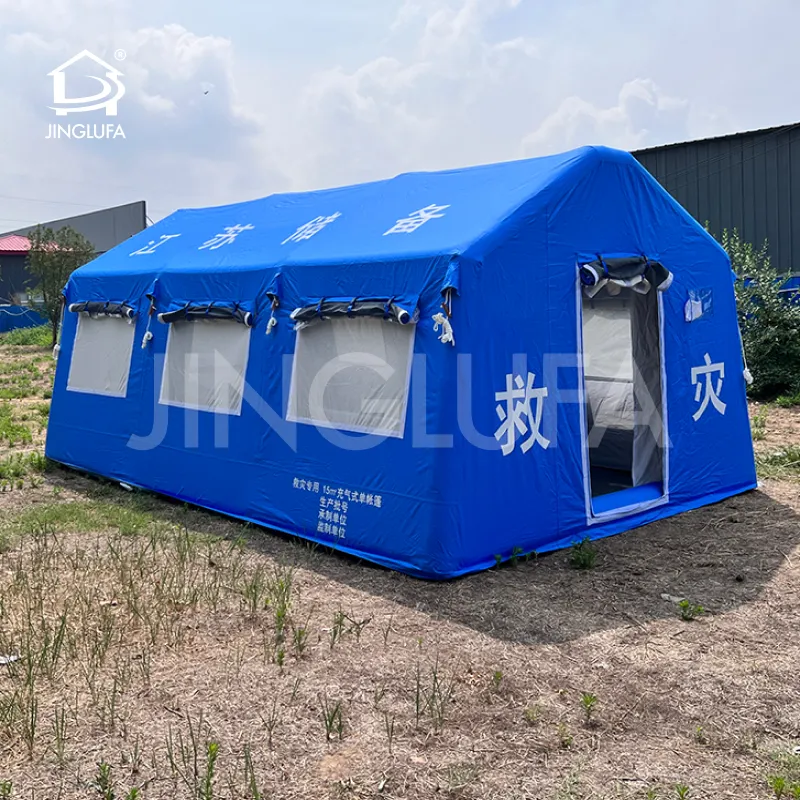
In the realm of modern temporary shelters, the outdoor air tent (inflatable tent) stands out for its rapid deployment and sleek design. Yet to fully harness its advantages and avoid pitfalls, users must understand how to use, maintain, and protect an inflatable shelter properly. Jinglufa's outdoor inflatable tent series is engineered with durability, performance, and user experience in mind—and following careful usage practices ensures you'll get the best life and performance from your inflatable tent.
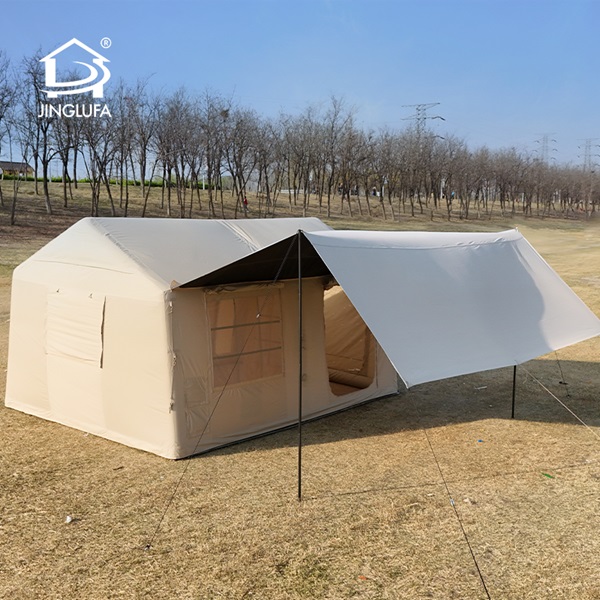
To ensure stable structure and safety, an outdoor air tent must be erected on level, debris-free ground. Before inflation, clear the area of sharp stones, sticks, or objects that can puncture the tent's air beams or fabric, and spread a groundsheet or footprint beneath to reduce abrasion. Connect the pump to the inflation valve and inflate section by section, allowing air chambers to expand gradually and evenly. Overinflation can strain seams, while underinflation may cause sagging or instability. Once the structure takes shape, stake down all anchor points and tension the guylines so that wind loads are transferred to the ground and not on the fabric or seams. Proper anchoring is critical—when weighty gusts strike, a well-staked outdoor air tent can resist collapse. In fact, some users report having their inflatable tents ride through strong storms intact when properly anchored.
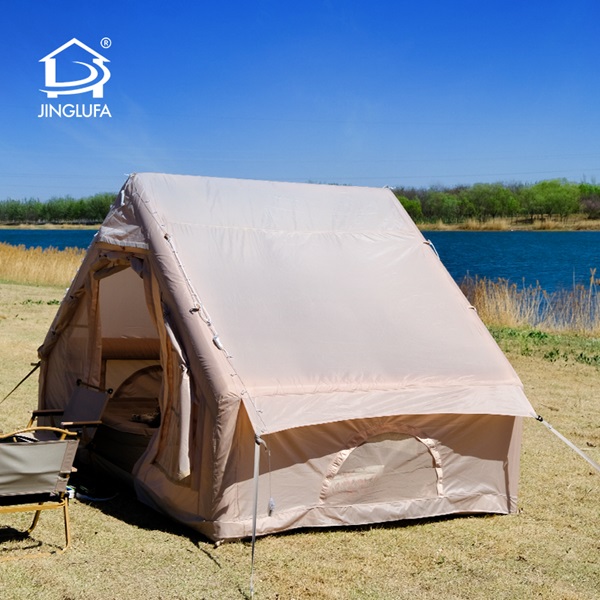
Maintaining your outdoor air tent correctly ensures it stays in service for many seasons. After each use, allow the tent to fully deflate, open all air valves, and press out residual air before folding. Wipe both inside and outside surfaces with a damp cloth to remove mud, salt, or stains that could degrade coatings. Avoid direct sunlight during storage; UV exposure gradually weakens fabric and air bladder materials. Inspect seams, valves, and air chambers periodically for subtle leaks or wear. Many inflatable tents come with repair kits; prompt patching of a tiny puncture helps prevent it from expanding. Store the tent dry and loosely folded in a breathable bag—compression over long periods can stress membranes. Use moderate inflation pressure during use and avoid over-pressurizing, especially under heat, as expanding air may strain seams.
Feature | Outdoor Air Tent | Traditional Pole / Frame Tent |
Setup Time | Fast — inflate in minutes | Longer — pole assembly and sleeve threading |
Mobility & Portability | High — deflatable and compact | Moderate — bulky pole sets |
Structural Flexibility | Air beams flex under load | Rigid poles may break under extreme stress |
Repair Complexity | Patchable tubes, valve replacement | Replace broken poles or connectors |
Stability in Wind | Dependent on anchor quality and chamber design | Strong under properly engineered frame |
Space Efficiency | Clear interior, no poles in middle | Some designs require internal poles |
Durability | Good if well maintained | Long lifespan but vulnerable joints/poles |
This table underscores that outdoor air tent designs excel in convenience and flexibility, while rigid frame tents may outperform in heavy load or extended deployments.
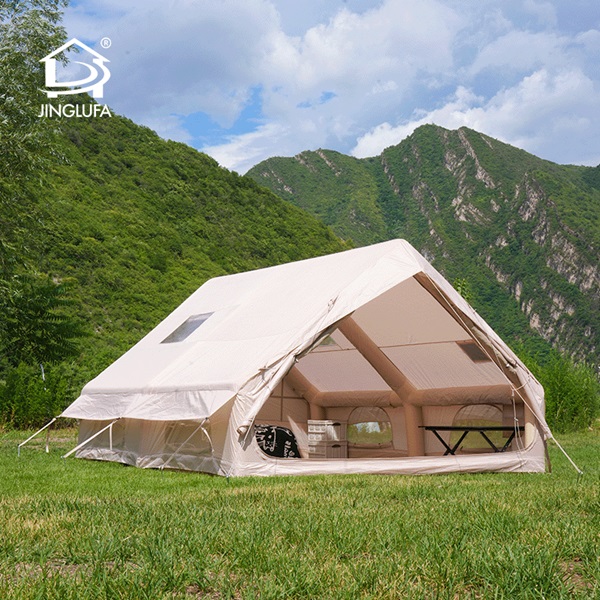
Have you ever worried about your inflatable shelter deflating at night, or how it holds up under wind or punctures? The key concerns when using an outdoor air tent are proper anchoring, controlled inflation, and vigilant inspection. Users have reported that once an inflatable tent is fully pressurized and anchored, it becomes "rock solid" in structure—though it must be staked securely to ground. Moreover, leaks or seam failures are rare if the tent uses high-quality materials and valves; many users say they only check pressure or adjust guylines every few days. Always avoid overinflation in hot conditions as air expands and can stress seams; instead, monitor and adjust pressure accordingly. Be cautious of sharp objects that might puncture the bladder, and carry a repair kit. Also, practice setting up in advance—learning the valves and layout in daylight avoids errors in field conditions.
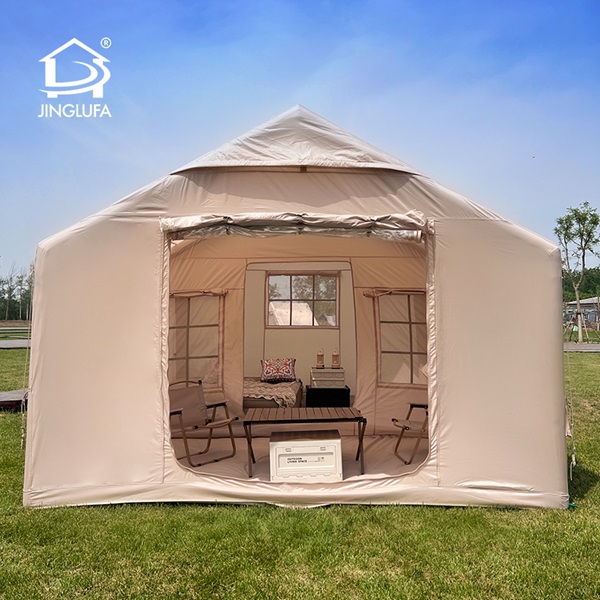
To make the most of your outdoor air tent while maximizing safety, always begin with site selection: avoid locations under loose tree limbs or over terrain that funnels water flow during rains. Use all anchor points and tend to guy lines to distribute load; a tent is only as strong as its anchoring system. When weather worsens, partially deflate slightly or remove side walls to relieve wind pressure. Never leave the tent unattended in high wind. During night cooling, air contracts, so you may need to re-inflation slightly to maintain structural tension. In cold weather, avoid leaving the tent inflated to max pressure, since expansion due to heating during the day may cause stress. Inspect the tent envelope, valves, and seams before each use. Insects, UV, and abrasion all contribute to material degradation over time. Keep a repair kit accessible, and test repair patches periodically. Always follow the manufacturer's guidance regarding inflation pressures, anchoring patterns, and maintenance schedules to ensure longevity.