1. Portability and Transportation
Lightweight: Inflatable tents use inflatable ribs, which are lighter compared to traditional metal or plastic supports, making them easier to carry.
Small Volume: When not in use, inflatable tents can be folded into a small size, occupying minimal space for easy storage and transportation. This is especially important for outdoor activities that require frequent mobility or long-distance travel.
2. Setup and Disassembly
Easy Setup: The setup process for inflatable tents is very quick. Simply lay the tent flat on the ground and inflate it using an air pump or manual inflating device. In contrast, steel frame tents require assembling the frame and fabric, which is relatively cumbersome.
Quick Disassembly: Disassembling an inflatable tent is equally simple. Just deflate and fold it. steel frame tents, on the other hand, require disassembling both the frame and fabric, which takes more time.
3. Stability and Durability
Good Stability: Although the frame of an inflatable tent is inflated, modern technology and materials ensure that it has good stability. Under normal use, an inflatable tent can withstand a certain amount of wind and load.
High Durability: Inflatable tents are made with high-quality materials, such as PVC double-coated fabric, which offer multiple advantages like fire resistance, mildew resistance, UV resistance, and moisture resistance. These features allow the inflatable tent to maintain good durability even in harsh environments.
4. Adaptability and Flexibility
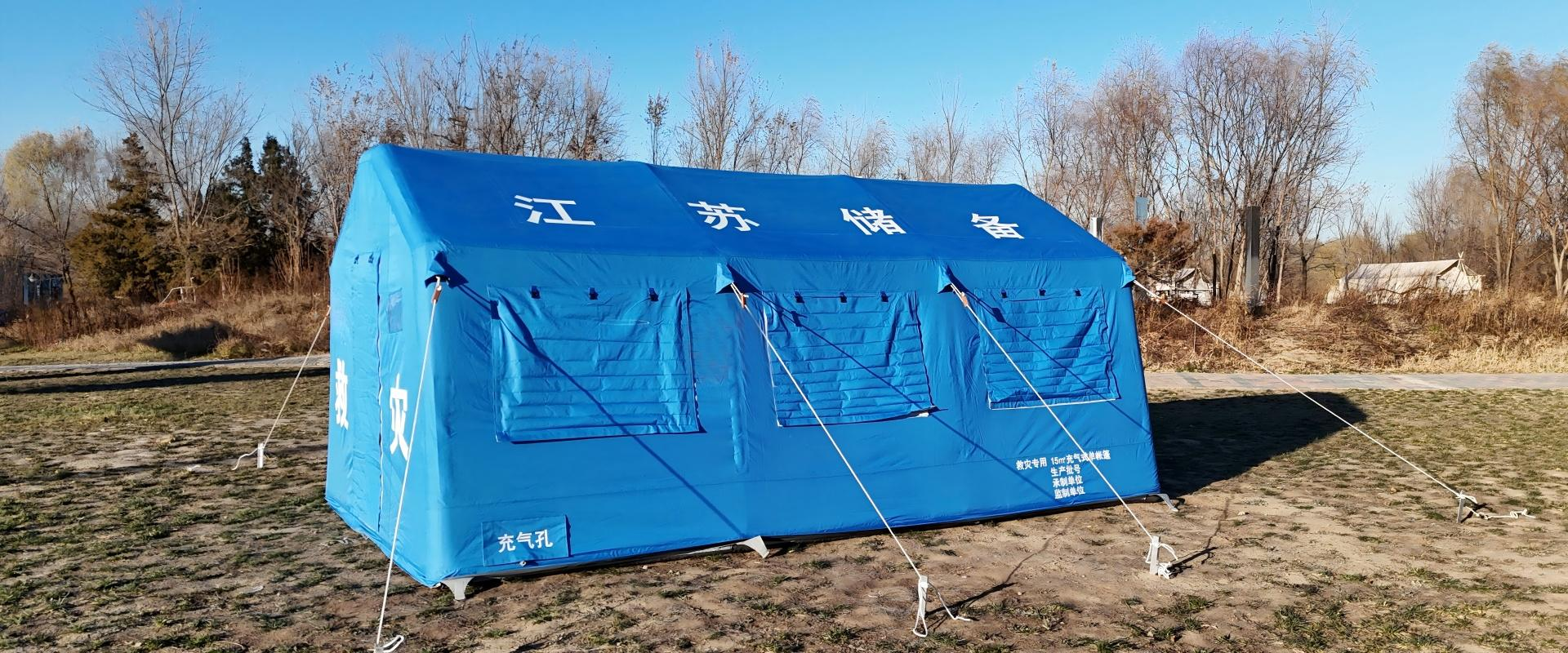
High Adaptability: Inflatable tents can adapt to various terrains and environments, especially suitable for use in complex or uneven terrains. Additionally, they can be airdropped for special operations, meeting specific needs.
High Flexibility: The side walls and cover of the inflatable tent can form an arch, with the ends having openings for doors and windows as needed, creating a fully inflatable, insulated, and soundproof special tent. This flexibility allows inflatable tents to perform excellently in various scenarios.
5. Maintenance and Upkeep
Easy Maintenance: The fabric and air columns of inflatable tents are made from materials that are easy to clean and maintain, ensuring they maintain good appearance and performance during use.
Low Upkeep Costs: Compared with steel frame tents, inflatable tents have lower maintenance costs. Should problems arise, such as air leaks, simple repairs can resolve the issue without needing to replace the entire frame.
In summary, inflatable tents have significant advantages over steel frame tents in terms of portability, setup and disassembly, stability and durability, adaptability and flexibility, as well as maintenance and upkeep. These advantages make inflatable tents an ideal choice for outdoor activities, whether it’s for camping, adventuring, or military applications, showcasing their unique performance.